
ADVANCED THERAPEUTIC LASER
Enhancing Patient Care
With Class IV Lasers
Berman Medical Lasers provide effective pain management and promote comfort by supporting deep-tissue healing. Exam room safety includes eyewear, controlled access, training, and clear protocols.
Complies with ANSI Z136.3 Safety Standards · Established Clinical Protocols
Clinical Safety First
Exam Room Safety Ensured by Four Key Precautions
Proven Comfort and Relief
Supports Effective Pain Management
Trusted Technology
Certified for Clinical Use and Patient Comfort
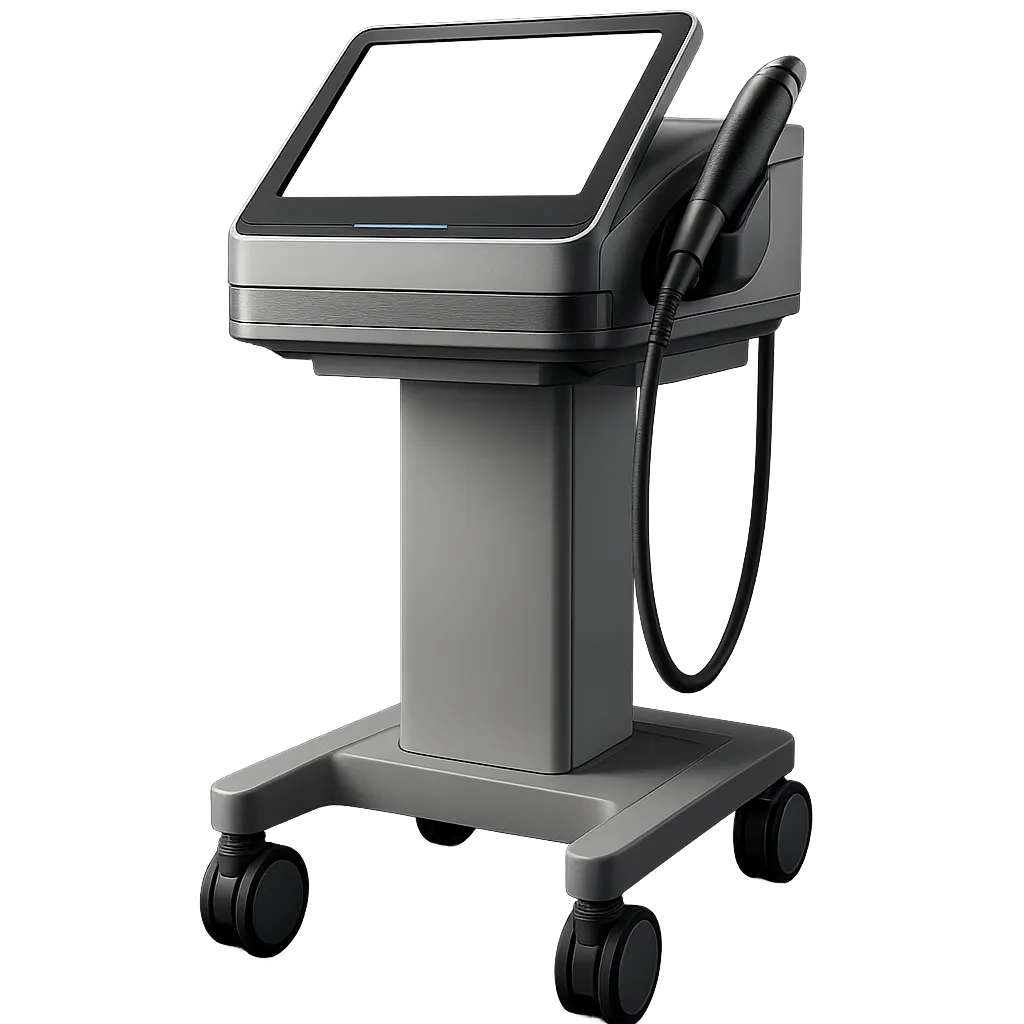
CLINICAL CLASSIFICATION MATRIX
Surgical vs. Therapeutic
A clear comparison of laser energy use: surgical lasers cause tissue removal through heat, while therapeutic lasers promote healing without damaging tissue.
ABLATIVE MODALITY
Surgical Lasers (CO₂, Nd:YAG, Diode Scalpel)
Designed for precise tissue cutting and coagulation using focused high-energy beams that vaporize tissue.
- Target Chromophores: Water (H₂O at 2,940nm / 10,600nm) and Oxyhemoglobin
- Penetration Depth: Superficial to minimal (under 2mm)
- Biological Mechanism: Irreversible thermal damage and vaporization
- Beam Geometry: Focused micro-spot beam (0.1mm - 0.4mm aperture)
- Clinical Objective: Precise cutting, stopping bleeding, and tissue removal
- Cellular State: Thermal coagulation and tissue necrosis
PHOTOBIOMODULATION MODALITY (PBMT)
Therapeutic Lasers (Berman Medical Lasers, Class IV PBMT)
Designed to deliver safe, deep tissue light energy that supports cellular repair and reduces pain without causing heat damage.
- Target Chromophores: Cytochrome c Oxidase, Melanin, and Hemoglobin
- Penetration Depth: Deep tissue (810nm - 1064nm wavelengths, up to 5–8 cm)
- Biological Mechanism: Stimulates mitochondrial function without damage
- Beam Geometry: Broad, defocused applicator head (20mm - 50mm spot size)
- Clinical Objective: Support ATP production, improve circulation, and reduce inflammation
- Cellular State: Maintains cell health while promoting regeneration
Safety Precautions: Use in exam rooms with controlled access, appropriate protective eyewear for patients and staff, regular equipment maintenance, and proper operator training to ensure safe application.
EVIDENCE-BASED THERAPEUTIC APPLICATIONS
Focused Clinical Benefits
Proven mechanisms show how Berman Medical Lasers aid tissue repair and pain management in key therapeutic areas, supporting patient comfort during treatment.
PODIATRY TREATMENT PROTOCOL
Plantar Fasciitis & Circulation Support
78%
VAS Pain Score Decrease at 4 Weeks
Dual wavelengths target cells to promote energy production and improve microvascular circulation, helping reduce pain and inflammation in persistent plantar fascia issues.
PHYSICAL THERAPY & REHABILITATION
Post-Surgical Joint & Soft Tissue Healing
3.2x
Faster Collagen Formation
Reduces inflammation and encourages new blood vessel growth, enabling patients to regain motion significantly faster than with standard therapy.
VETERAN & COMPLEX TRAUMA CARE
Neuropathic Pain & Blast Injury
64%
Opioid Use Reduction in Trauma Patients
High-intensity laser treatment reduces nerve sensitivity and inflammation, providing lasting relief from chronic pain and decreasing reliance on opioids.
INSTITUTIONAL COMPLIANCE & FACILITY READINESS
Essential Safety Measures
Clear protocols designed to protect patients and staff while meeting ANSI Z136.3 and OSHA healthcare safety standards.
Effective use of Class IV Berman Medical Lasers relies on strict room safety controls. With a designated Laser Safety Officer and defined Nominal Hazard Zone, clinics can safely integrate laser therapy without disrupting standard hygiene or workflow.
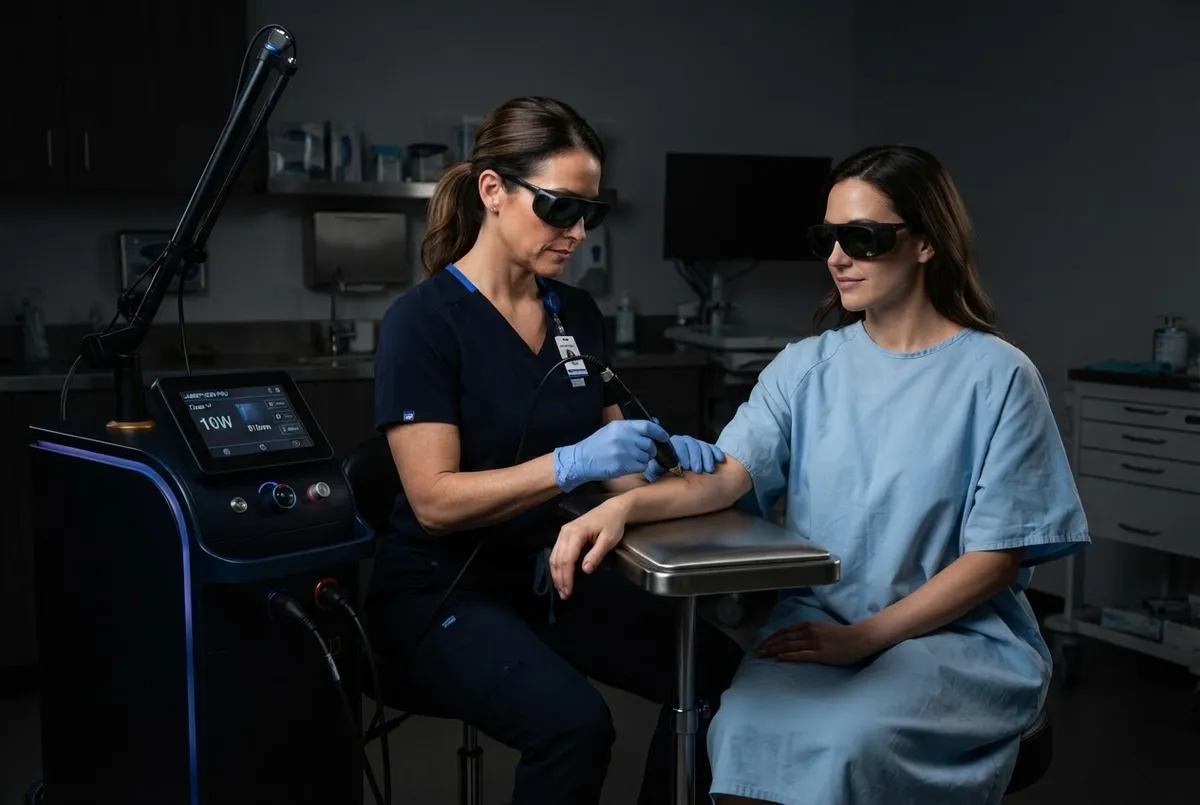
Compliance Support: Each system includes documentation, LSO SOP manuals, and room audit templates to streamline safety verification.
Safety Protocol Checklist
ANSI Z136.31. Wavelength-Specific Eyewear
Protective eyewear certified to the specific laser wavelength (OD 5+) must be worn by all persons in the room before laser use.
✓ OSHA 29 CFR 1910.1332. Controlled Room Access & Interlocks
Treatment rooms must have illuminated external warning signs and door interlock systems to prevent unauthorized entry during laser operation.
✓ ANSI Section 4.3 Engineering Control3. Non-Reflective Environment
Mirrored surfaces, speculum instruments, and uncovered windows within the laser hazard zone must be covered or treated with anti-reflective materials.
✓ Beam Scatter Mitigation4. LSO Oversight & Recording
A designated Laser Safety Officer performs regular calibration checks and maintains comprehensive digital logs of patient treatments.
✓ Healthcare Risk ProtocolOPERATIONAL & REGULATORY GOVERNANCE
Clinician Insights
Guidance on operational protocols, staffing delegation, and risk management for clinical directors considering Berman Medical Lasers Class IV therapeutic laser integration.
What is the typical capital amortization timeline and operational break-even for private practice incorporating this device?
Private practices generally recover initial investment within 6 to 9 months, based on a conservative schedule of 4 to 6 patient treatments daily. Reimbursement through established CPT codes combined with self-pay therapeutic packages supports solid clinical margins.
How does Class IV laser use comply with state medical board delegation and supervision regulations?
Laser treatment falls under jurisdictional supervision statutes. Licensed physical therapists, athletic trainers, and certified medical assistants often may operate under indirect physician oversight when certified by an institutional Laser Safety Officer.
What FDA 510(k) clearances and documentation support hospital credentialing?
Each Berman Medical Lasers platform includes FDA 510(k) clearance for pain management and inflammation reduction. Institutional packages include electrical safety certifications, ANSI Z136.3 compliance checklists, and malpractice support letters.
What training requirements and clinical downtime apply for onboarding multiple providers?
Our physician-designed training includes 8 hours of self-directed study and a 4-hour clinical practicum, enabling clinicians to achieve full competency and credentialing within 10 business days without disrupting schedules.
How is thermal tissue risk controlled during high-fluence deep tissue therapy?
Four safety measures include active thermal sensing, dynamic tissue-contact sensors, real-time fluence modulation, and conservative skin temperature limits to prevent thermal injury across all skin types.
LEGAL & COMPLIANCE DESK
Institutional Trust & Verification
Direct liaison with hospital credentialing teams, healthcare risk managers, and clinical committee chairs to streamline institutional adoption.
- FDA 510(k) Substantial Equivalence Summary
- ANSI Z136.3 Healthcare Protocol Packet
- Dedicated Laser Safety Officer (LSO) Manual
- Practice Economics & CPT Coding Guide
Need bespoke credentialing support or custom financial pro forma models for hospital review?
CLINICAL FACILITY RESOURCE
Request Your Information Guide
Equip your clinical leadership with clear facility preparation steps, safety precautions including eye protection, controlled access, equipment calibration, and staff training, all tailored for VA health networks and private specialty surgical centers.
FDA 510(K) CLEARED : CLASS IV MEDICAL LASER DEVICE
MANDATORY MEDICAL REGULATORY & CLINICAL SAFETY NOTICE
The Berman Medical Lasers Class IV Therapeutic Laser is an FDA 510(k) Cleared medical device designed exclusively for use by licensed physicians, physical therapists, and certified healthcare professionals. Laser treatment requires strictly controlled Class IV laser areas, oversight by a designated Laser Safety Officer (LSO), use of certified OD 5+ protective eyewear meeting ANSI Z136.3 and IEC 60825-1 standards, and adherence to institutional safety protocols. This device is not intended for consumer use or unguided home treatments.
Accreditation & Standards: ANSI Z136.3 Safe Laser Operation in Healthcare : IEC 60825-1 Laser Safety : ISO 13485 Medical Device Quality Management : OSHA 29 CFR 1910.133 Clinical Eye and Face Protection Compliant.


Clinical Safety Officer (LSO) Support: 1-800-555-CLINIC : Regulatory Inquiries: [email protected] : Hours: Mon-Fri 8:00 AM - 6:00 PM EST
(C) 2026 Berman Medical Lasers Inc. All Rights Reserved.